
The Benefits of Multi-Age Grouping: Why Mixed-Age Classrooms Prepare Children for Life
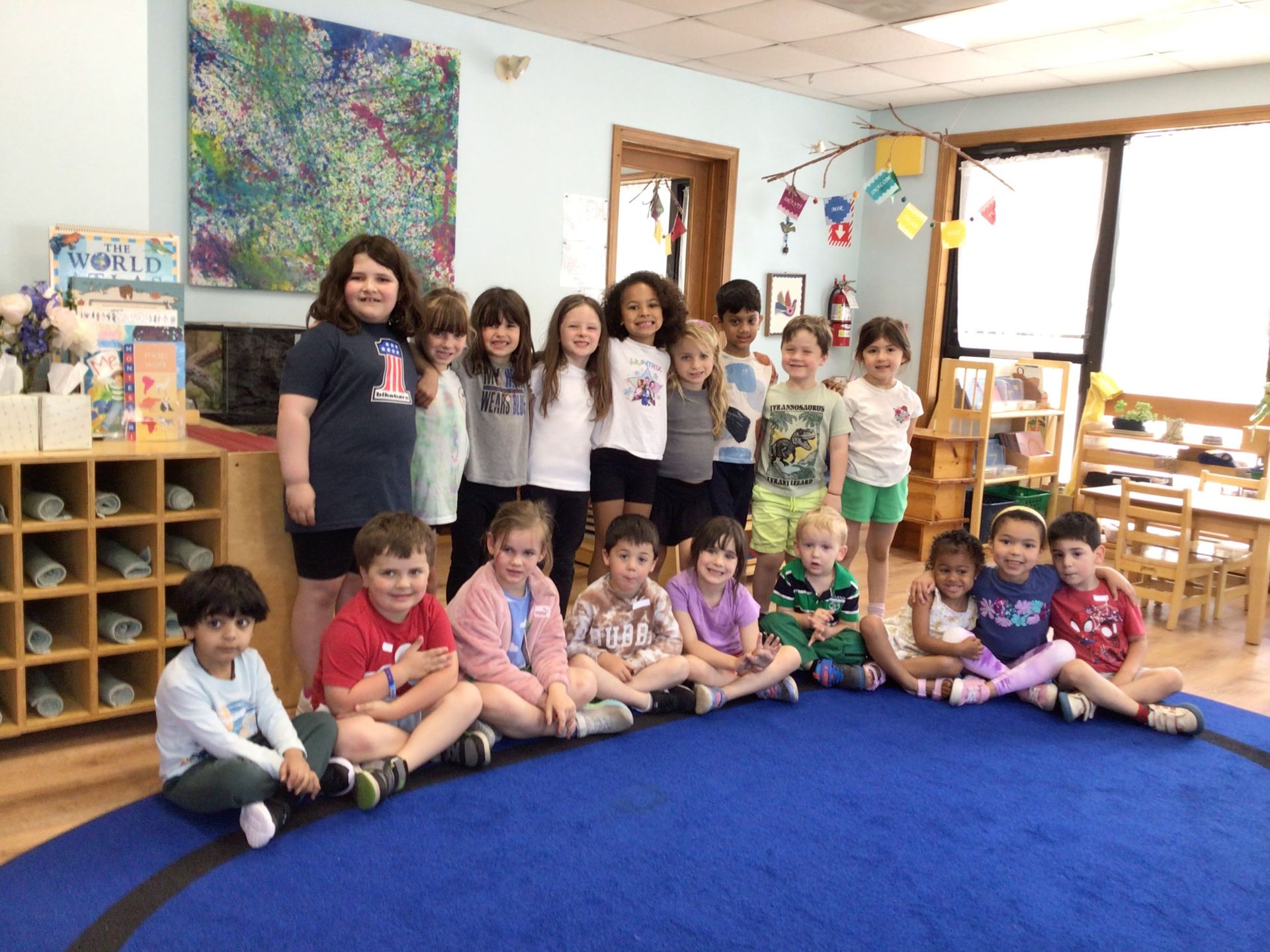
One hallmark of an authentic Montessori education is the use of multi-age learning communities. While conventional schools traditionally group children strictly by birth year, Montessori environments are intentionally structured across multi-year developmental spans.
At Wading River Montessori School, our classrooms reflect these natural developmental groupings:
- Toddler Environments: Serving children 18 months to 3 years, focusing on language explosion, order, and independence.
- Primary Classrooms: Serving children ages 3 to 6, bringing preschool and kindergarten-aged children together.
- Elementary Programs: Serving children ages 6 to 12 in collaborative, inquiry-driven environments.
While multi-age classrooms may look different from what many parents experienced growing up, this structure is one of the most powerful aspects of our approach. Here is why grouping children across ages creates such a rich foundation for academic and social growth:
1. Learning at an Individual Pace
In a multi-age classroom, children benefit from flexibility when mastering new concepts. We know that learning is not linear—children experience periods of rapid growth, plateaus, and gentle consolidation.
Because our classrooms span multiple ages, children work at their own natural pace without the pressure of keeping up with a single-age cohort or feeling held back. A child who is ready for advanced mathematical concepts can dive deep into concrete materials with older peers, while a child needing extra support receives gentle, individualized guidance. No child feels labeled or left behind; instead, every learner finds the exact level of challenge they crave.
2. Building Strong, Trusting Relationships
Traditionally, children transition to a new classroom and a new teacher every single year. In a Montessori environment, children remain with the same guide (teacher) for a full three-year cycle.
This extended time allows guides to form deep, meaningful connections with each child and family. Over three years, educators truly learn what sparks a child's curiosity, how they navigate challenges, and what environment helps them thrive. For parents, this creates a seamless home-to-school partnership built on trust, clear communication, and a shared commitment to the child’s growth.
3. Nurturing Natural Mentors and Leaders
Spending three years in the same classroom community affords children two distinct developmental opportunities:
- The Early Years (Observing and Learning): Younger students are surrounded by helpful peer mentors. They watch older classmates engage in complex, advanced work, which naturally sparks their curiosity and desire to learn.
- The Leadership Year (Mentoring and Guiding): In their final year of the cycle, children step into a joyful leadership role. Older students solidify their own knowledge by giving lessons, helping younger friends solve problems, or offering a comforting hand.
This transition from observer to mentor happens in its own time, giving children an immense sense of pride, empathy, and social confidence.
4. Mirroring Real Life
Outside of a traditional school setting, there is virtually no place in real life where people are separated strictly by chronological age. In families, workplaces, and local communities, adults and children continuously interact, collaborate, and learn alongside people of varying ages and backgrounds. Multi-age classrooms mirror the real world, teaching children grace, courtesy, empathy, and effective communication across ages.
5. Honoring the Natural Planes of Development
Transitioning to a new classroom is a meaningful step, but in Montessori, these transitions align directly with natural human development. Dr. Maria Montessori observed distinct developmental milestones around ages 3, 6, and 12.
By keeping children together through these natural three-year developmental cycles, WRMS provides a stable, cozy community where students feel safe to explore, take intellectual risks, and build true self-reliance. When it comes time to move to the next plane of development, they step forward with confidence, resilience, and a genuine love of discovery.
Many families first hear about Wading River Montessori School from other parents in our community who have watched their children blossom in multi-age environments.
To learn more about our toddler through elementary programs or to inquire about the cost of enrollment for the upcoming school year, we invite you to
schedule a visit. We look forward to welcoming your family!